
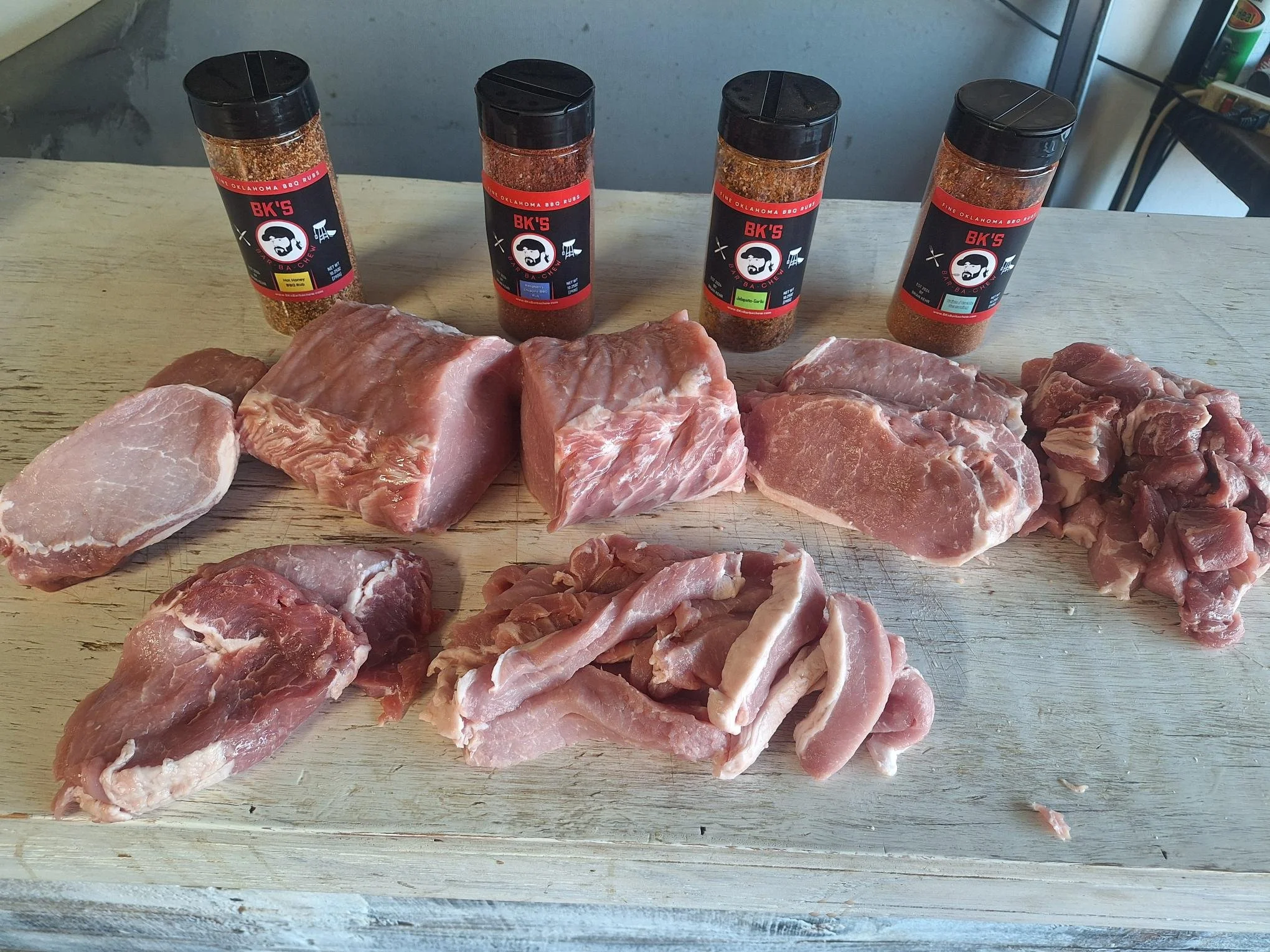
How to Break Down a Pork Loin into Multiple Cuts
Breaking down a whole pork loin allows for a variety of cuts suited to different cooking methods. With a sharp boning knife and a clean cutting surface, the loin can be portioned into stew meat, roasts, thin breakfast chops, sirloin chops, thick center-cut chops, and stir-fry strips. Follow these steps for an efficient and precise breakdown.
1. Preparation
Place the pork loin on a clean cutting board with the fat cap facing up.
Trim excess surface fat and silver skin, leaving a thin layer of fat for flavor and moisture.
Identify the three main sections: blade end (shoulder side), center cut (middle section), and sirloin end (hip side).
2. Separate the Sections
Locate the natural seams between the sections.
Cut between the sirloin end and center cut first, about 4–5 inches from the hip end.
Then separate the blade end from the center cut, about 6–8 inches from the shoulder side.
You now have three manageable pieces to work with.
3. Sirloin End – Sirloin Chops and Stew Meat
From the sirloin end, slice 1-inch-thick pieces for sirloin chops.
Once the desired number of chops is cut, cube the remaining portion into 1-inch pieces for stew meat.
Trim any excess fat or connective tissue from the cubes.
4. Center Cut – Thick and Thin Chops
From the center cut, slice 1½-inch-thick portions for thick center-cut chops.
For thin breakfast chops, adjust the thickness to about ¼ inch.
Keep cuts even for consistent cooking.
If desired, remove the tenderloin (if still attached) before slicing to use separately for stir-fry or medallions.
5. Blade End – Roasts and Stir-Fry
The blade end contains more marbling and connective tissue, making it ideal for roasts.
Cut a 2–3 pound section for a blade roast.
Trim the remaining portion of the blade end into thin strips, about ¼ inch wide, for stir-fry.
Remove any large pieces of fat or sinew for a cleaner texture.
6. Final Trimming and Packaging
Inspect all cuts for uniformity and trim edges as needed.
Label and package each type of cut separately: chops, roasts, stew meat, and stir-fry.
Store in the refrigerator for short-term use or freeze for longer preservation.
7. Summary of Cuts
Section
Cut Type
Thickness/Size
Best Use
Sirloin End
Sirloin Chops
1 inch
Grilling, pan-searing
Sirloin End
Stew Meat
1-inch cubes
Slow cooking, stews
Center Cut
Thick Center-Cut Chops
1½ inches
Grilling, baking
Center Cut
Thin Breakfast Chops
¼ inch
Quick frying
Blade End
Roast
2–3 lbs
Roasting, slow cooking
Blade End
Stir-Fry Strips
¼ inch thick
Quick stir-frying
Properly breaking down a pork loin maximizes yield and versatility, providing a range of cuts suitable for everyday meals and special occasions alike.